27/10/2025
  Cost Compass




In addition to gypsum plasterboards, wood panels are also used in drywall construction.
Drywall construction offers many possibilities for renovating or upgrading a home. It allows you to redesign walls, ceilings, and floors while easily integrating additional insulation using prefabricated drywall elements.
A major advantage of drywall construction is that it allows for fast and simple implementation of many interior renovation projects.
While gypsum plasterboard is the most common material used in stud-frame systems, wood paneling and other materials are also part of modern drywall construction.
What Factors Influence the Cost?
The following factors determine the overall price of drywall construction in a home:
-
Surface area of the drywall
-
Type of construction (insulation, partitioning, acoustic)
-
Materials used
-
Labor costs
Are There Subsidies Available?
Yes. As part of energy-efficient renovation programs, there are government grants available for certain drywall measures.
These include:
-
Drywall partitions
-
Suspended ceilings
-
Dry construction floors
-
Stretch ceilings
Any construction work carried out within the framework of an energy efficiency renovation is generally eligible for funding.
The KfW 430 program offers investment grants, while KfW 151/152 provides low-interest renovation loans.
How Much Does a Dry Construction Floor Cost?
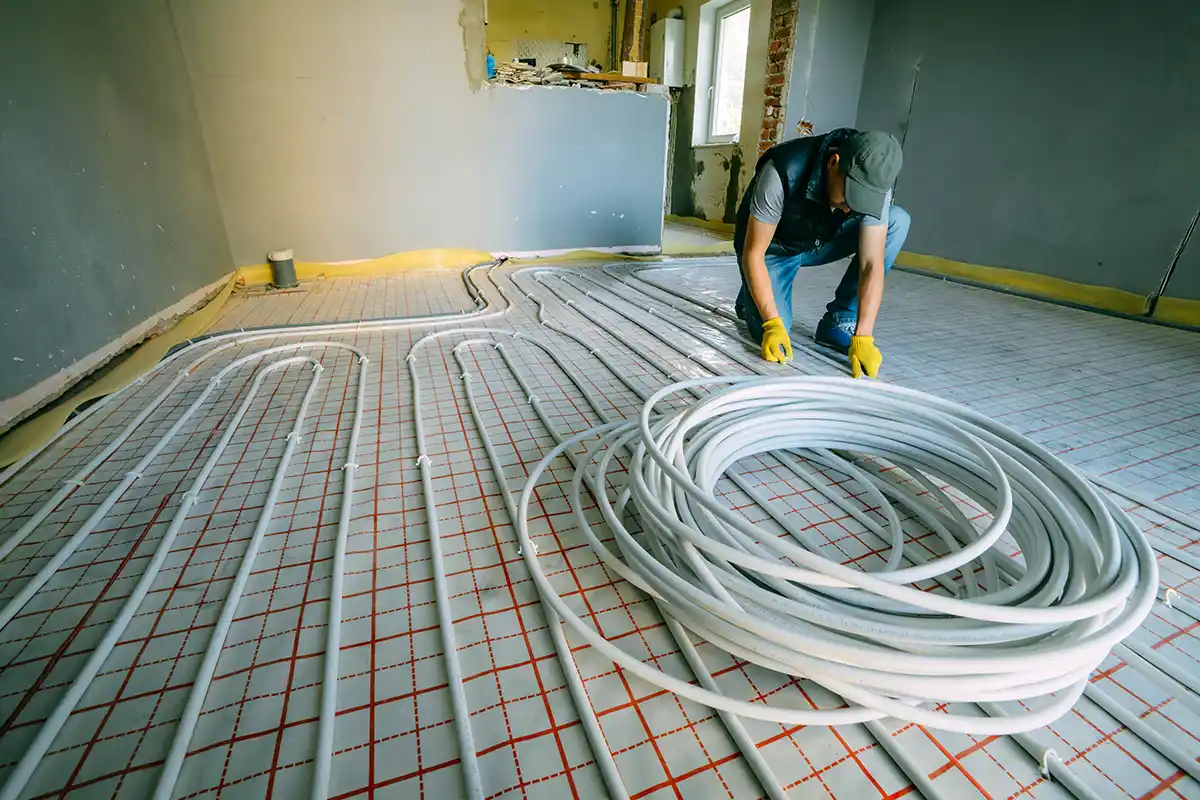
Dry construction floors are a popular choice during renovations because they can be installed quickly and are immediately usable.
The installation process is also relatively simple.
Gypsum fiberboard floors
These cost 5–10 euros/m² on average. They may include mineral wool or foam layers and are suitable for all types of floor coverings (e.g., cork, wood, PVC, tiles).
Wood fiberboard floors
These cost 40–50 euros/m² and provide excellent sound and thermal insulation.
They are easy to cut and install and are also environmentally friendly.
Composite gypsum boards
These are made from two materials, often used to achieve improved performance for floors or walls.
XPS insulation boards
Made of extruded polystyrene foam, these cost 15–20 euros/m² and offer high thermal insulation and moisture resistance.
Wood wool panels (HWL)
These cost 70–90 euros/m² and are valued for impact sound insulation, durability, and fire resistance.
How Much Does a Drywall Ceiling Cost?
Drywall ceilings vary in materials and functions and can serve both aesthetic and acoustic purposes.
Suspended ceiling
Approx. 40–60 euros/m², including materials and installation.
Stretch ceiling
Made from special PVC film, costs 100–120 euros/m², including installation.
Light ceiling
Transparent stretch ceiling with built-in lighting, costs 130–150 euros/m² plus lighting elements (€250–€1,200).
Suspended ceiling with infrared heating
Costs 260–280 euros/m², combining stretch ceiling with hidden infrared heating films.
Acoustic ceiling
Costs 65–95 euros/m², featuring perforated gypsum boards with sound-absorbing fleece on the back.
How Much Does a Drywall Partition Cost?
The price depends on the type and material of the partition.
Gypsum board wall
Approx. 30–60 euros/m², including metal frame, screws, and filler.
Wooden frame with OSB boards
Approx. 40–70 euros/m², including installation.
Acoustic wall
Used for sound insulation, with additional insulation material costing 5–20 euros/m² (e.g., mineral wool).
Example Calculation: Drywall Construction
The following table shows example costs for a 10 m² room with full drywall installation.
| Material | Cost (€) |
|---|---|
| Drywall partition (gypsum board) | 990 |
| Suspended ceiling (gypsum board) | 400 |
| Dry floor (gypsum fiberboard) | 50 |
| Total | 1,440 |
 Back to News


 27/10/2025